We empower healthcare education with Advanced Medical Simulation for realistic clinical skill training.

The Complete Guide to Medical Simulation Manikins: Types, Applications, Benefits, Buying Guide, Maintenance & Future Trends
July 15, 2026
admin
Introduction: The Night Everything Changed
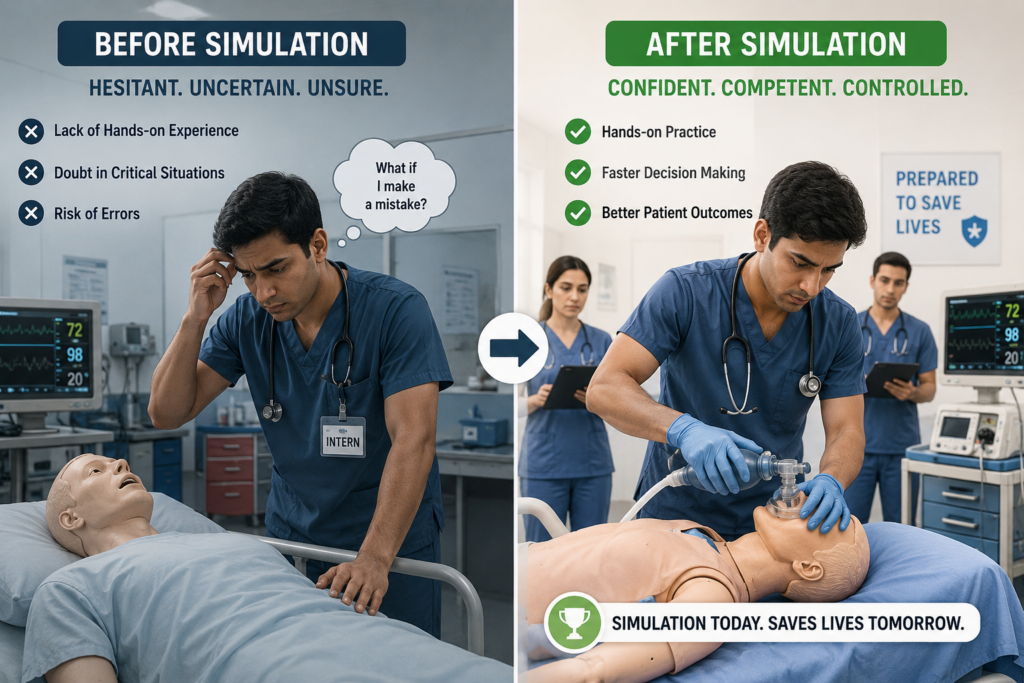
It is 2 a.m. in a busy emergency department. A young intern, fresh from years of textbooks and toppers’ lists, is on her first solo shift. A patient in the room suddenly collapses.
For a fraction of a second, she freezes.
She knows what she is supposed to do. She has written down the steps times in her exams. But she has never actually done it. She has never had to put her hands on a person’s chest, hear the sound of a machine beeping or feel the pressure of everyone looking at her for help. It turns out knowing what to do and being ready to do it are two things.
Now let us go back to a time before this.
Imagine the intern, a few months ago in a special lab where they practice medical skills. She has practiced CPR on a patient many times. She has handled heart attacks, taken care of difficult breathing problems, practiced using a defibrillator until it became easy and worked through emergency scenarios that made her think on her feet. All in a safe place where no real person would get hurt.
When a real emergency happens this version of her does not wait. Her hands already know what to do. She is calm and does not panic.
The difference between knowing what to do and actually doing it is what medical simulation is for.
Medical knowledge is important to save lives. Being able to use that knowledge at the right time is what really saves lives.
This is why practicing skills is one of the best ways to improve medical training and why medical simulation manikins are now used in many medical colleges, nursing schools, hospitals and skill labs in India and around the world. This guide will explain everything medical institutions need to know about medical simulation manikins. What they’re, how to choose the right one and what new developments are coming next.
3. What Is a Medical Simulation Manikin?
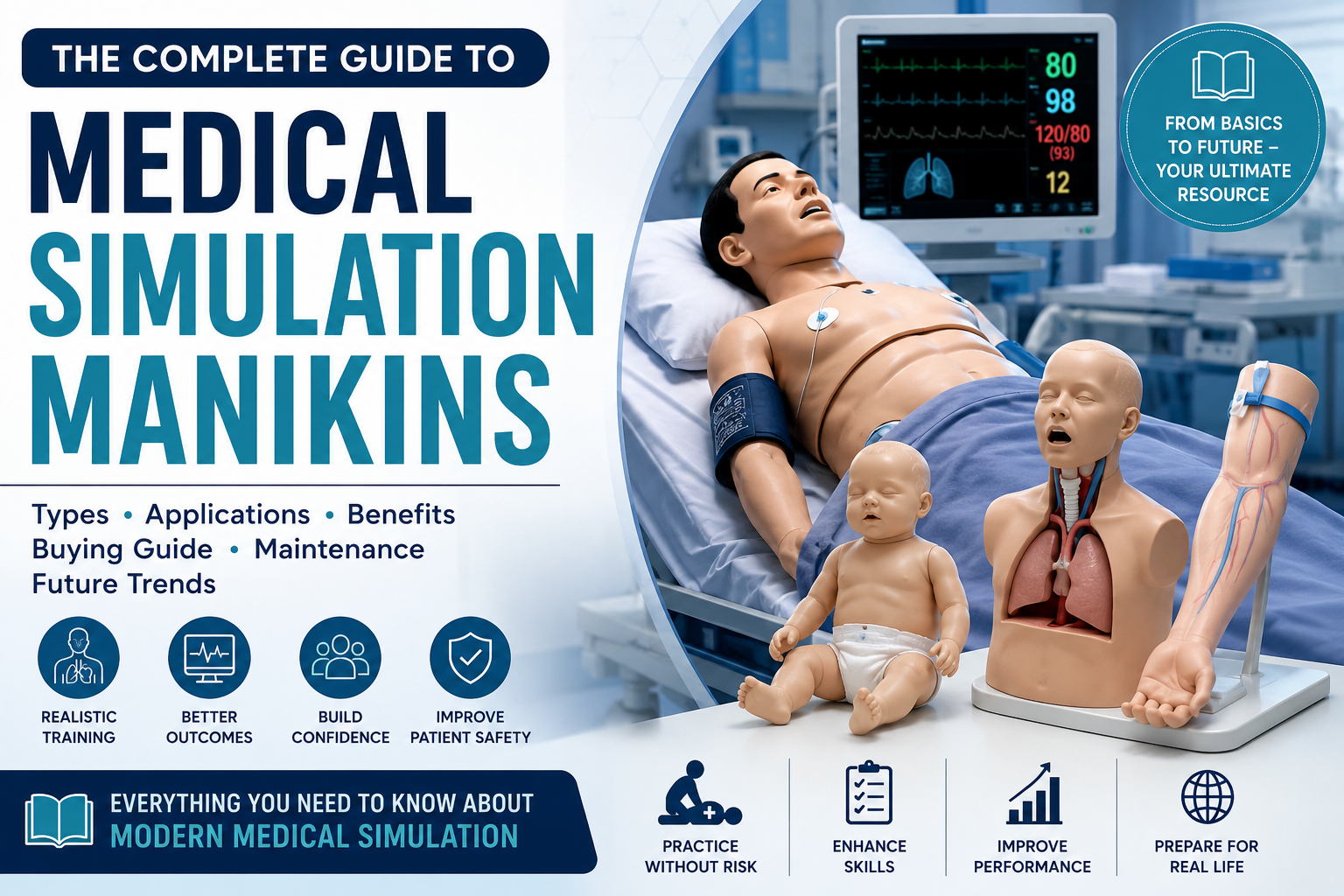
A medical simulation manikin is a life-sized, anatomically accurate training model designed to replicate the human body. Its anatomy, physiology, and clinical responses – so healthcare learners can practice real procedures without any risk to a real patient.
Unlike the static mannequins used decades ago, today’s simulation manikins can breathe, generate a pulse, display heart and lung sounds, respond to medication, bleed, seize, and even “talk” through built-in speaker systems controlled by an instructor.
A brief history:
- 1960s – Resusci Anne, a simple CPR training model, introduced the concept of hands-on resuscitation training.
- 1990s – Harvey, a cardiology patient simulator, brought physiological realism to cardiac education.
- 2000s – Computer-controlled, wireless high-fidelity manikins entered mainstream medical colleges.
- 2020s–2026 – AI-enabled manikins, cloud-connected debriefing software, and hybrid VR/manikin systems are redefining what “practice” means in healthcare education.
How they work (in simple terms): Inside a modern manikin is a combination of internal pumps, sensors, speakers, and a control system (often tablet or software-based) that an instructor uses to trigger a scenario – for example, a sudden drop in oxygen saturation or a cardiac arrhythmia and observe how the learner responds in real time.
4. Why Traditional Learning Is No Longer Enough
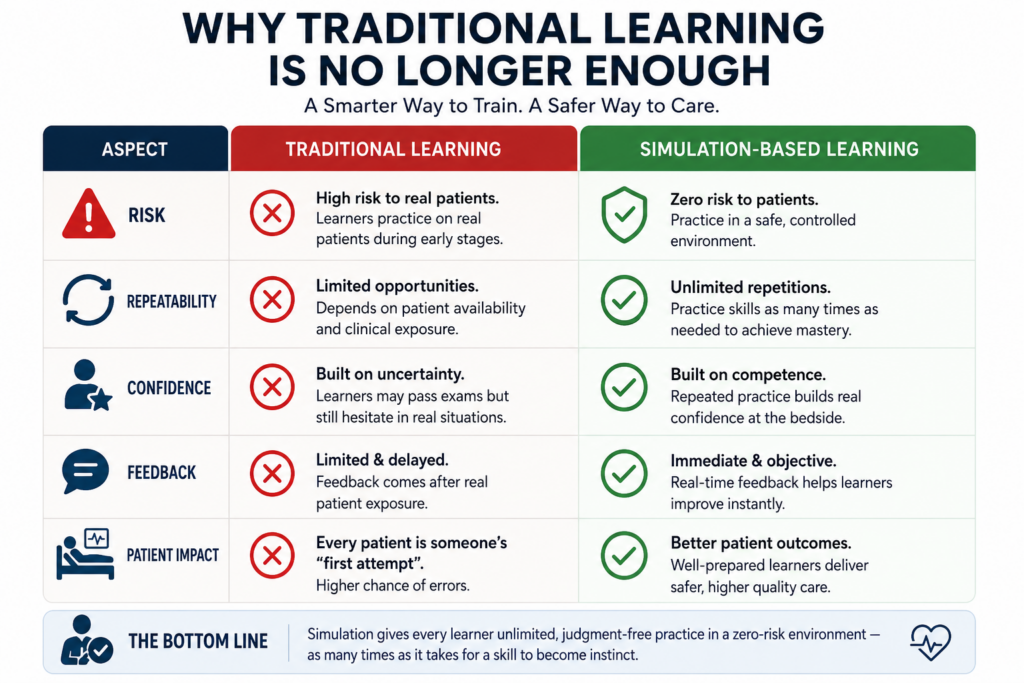
For generations, clinical training followed a simple model: read, observe, then practice on real patients. That model carries real risk.
- Data on safety has shown that new doctors and nurses make mistakes when they do not have enough hands-on practice before doing real procedures.
- Being confident in your skills does not come from grades. It comes from doing things over and over. A student may pass all their exams. Still feel unsure when working with real patients.
- Every real patient is different, but no learner should be someone’s “first attempt” at a critical procedure.
- Skills like CPR, intubation, and IV cannulation are perishable — they fade without repeated practice, something textbooks cannot provide.
Simulation training helps by letting learners practice as many times as they need in a safe environment where they will not make mistakes that hurt patients. This way they can get really good at these skills.
5. What Is Simulation-Based Medical Education (SBME)?
Simulation-Based Medical Education (SBME) is a structured teaching methodology that uses realistic simulated environments (manikins, standardized patients, VR, or task trainers) to build clinical competence through practice, feedback, and reflection.
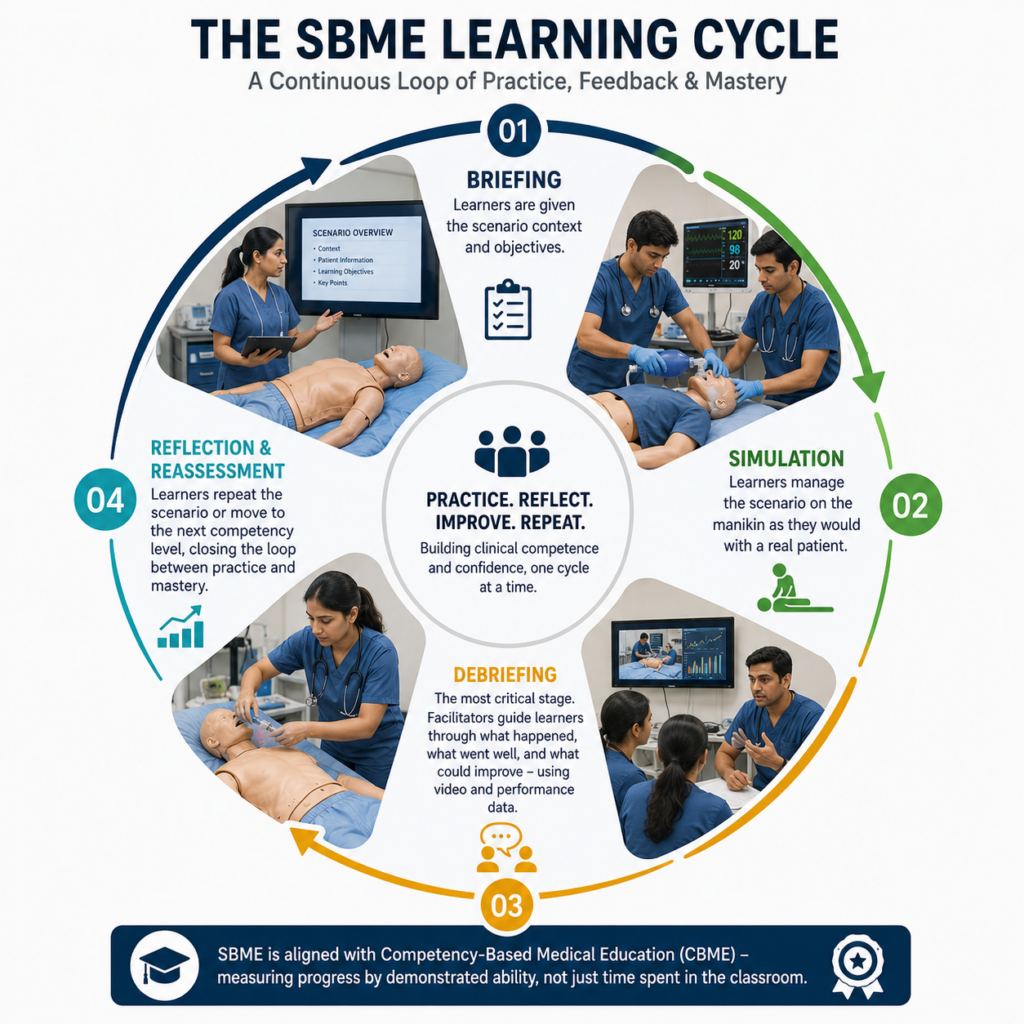
The SBME learning cycle typically follows four stages:
- Briefing – Learners are given the scenario context and objectives.
- Simulation – Learners manage the scenario on the manikin as they would with a real patient.
- Debriefing – The most critical stage. Facilitators guide learners through what happened, what went well, and what could improve often using recorded video and performance data.
- Reflection & Reassessment – Learners repeat the scenario or move to the next competency level, closing the loop between practice and mastery.
SBME is closely tied to competency-based medical education (CBME), where progress is measured not by hours spent in a classroom but by demonstrated ability to perform a skill safely and correctly.
6. Types of Medical Simulation Manikins
Choosing the right manikin starts with understanding the landscape. Manikins are generally categorized by fidelity level (how realistic they are) and by clinical specialty (what they are designed to teach).
By Fidelity Level
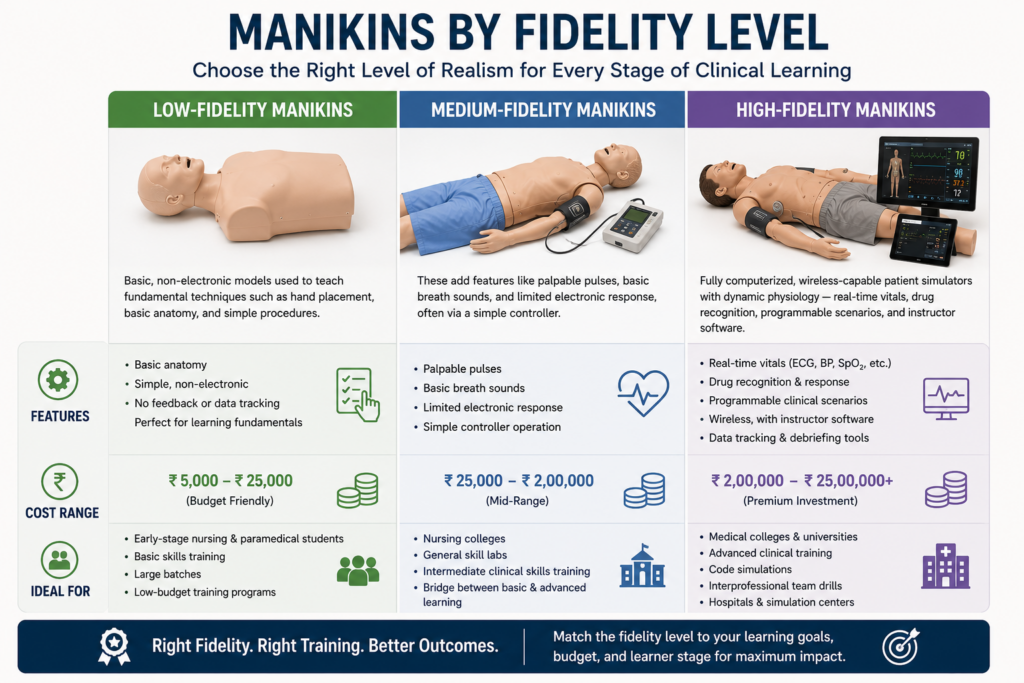
Low-Fidelity Manikins Basic, non-electronic models used to teach fundamental techniques such as hand placement, basic anatomy, and simple procedures. Ideal for early-stage nursing and paramedical students, and for large-batch, low-budget training.
Medium-Fidelity Manikins These add features like palpable pulses, basic breath sounds, and limited electronic response, often via a simple controller. They bridge the gap between basic skills practice and full clinical realism, and are popular in nursing colleges and general skill labs.
High-Fidelity Manikins Fully computerized, wireless-capable patient simulators with dynamic physiology — real-time vitals, drug recognition, programmable scenarios, and instructor software. These are used for advanced clinical training, code simulations, and interprofessional team drills in medical colleges and hospitals.
By Clinical Specialty
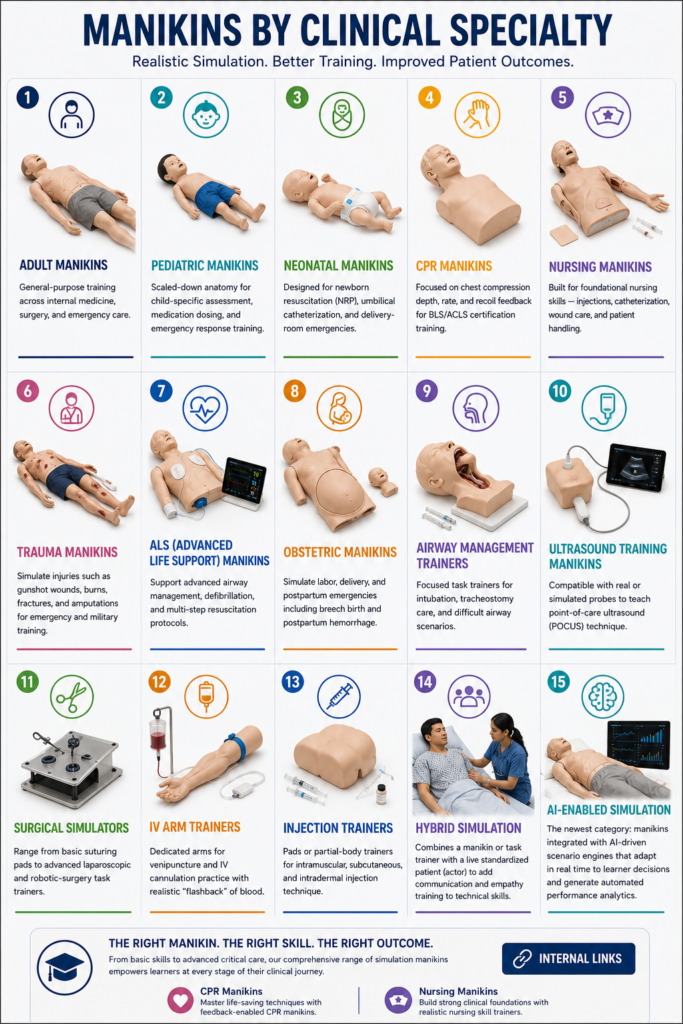
Adult Manikins – General-purpose training across internal medicine, surgery, and emergency care.
Pediatric Manikins – Scaled-down anatomy for child-specific assessment, medication dosing, and emergency response training.
Neonatal Manikins – Designed for newborn resuscitation (NRP), umbilical catheterization, and delivery-room emergencies.
CPR Manikins – Focused specifically on chest compression depth, rate, and recoil feedback for BLS/ACLS certification training.
Nursing Manikins – Built for foundational nursing skills — injections, catheterization, wound care, and patient handling.
Trauma Manikins – Simulate injuries such as gunshot wounds, burns, fractures, and amputations for emergency and military training.
ALS (Advanced Life Support) Manikins – Support advanced airway management, defibrillation, and multi-step resuscitation protocols.
Obstetric Manikins – Simulate labor, delivery, and postpartum emergencies including breech birth and postpartum hemorrhage.
Airway Management Trainers – Focused task trainers for intubation, tracheostomy care, and difficult airway scenarios.
Ultrasound Training Manikins – Compatible with real or simulated probes to teach point-of-care ultrasound (POCUS) technique.
Surgical Simulators – Range from basic suturing pads to advanced laparoscopic and robotic-surgery task trainers.
IV Arm Trainers – Dedicated arms for venipuncture and IV cannulation practice with realistic “flashback” of blood.
Injection Trainers – Pads or partial-body trainers for intramuscular, subcutaneous, and intradermal injection technique.
Hybrid Simulation – Combines a manikin or task trainer with a live standardized patient (actor) to add communication and empathy training to technical skills.
AI-Enabled Simulation – The newest category: manikins integrated with AI-driven scenario engines that adapt in real time to learner decisions and generate automated performance analytics.
7. Applications: Where Simulation Manikins Are Used
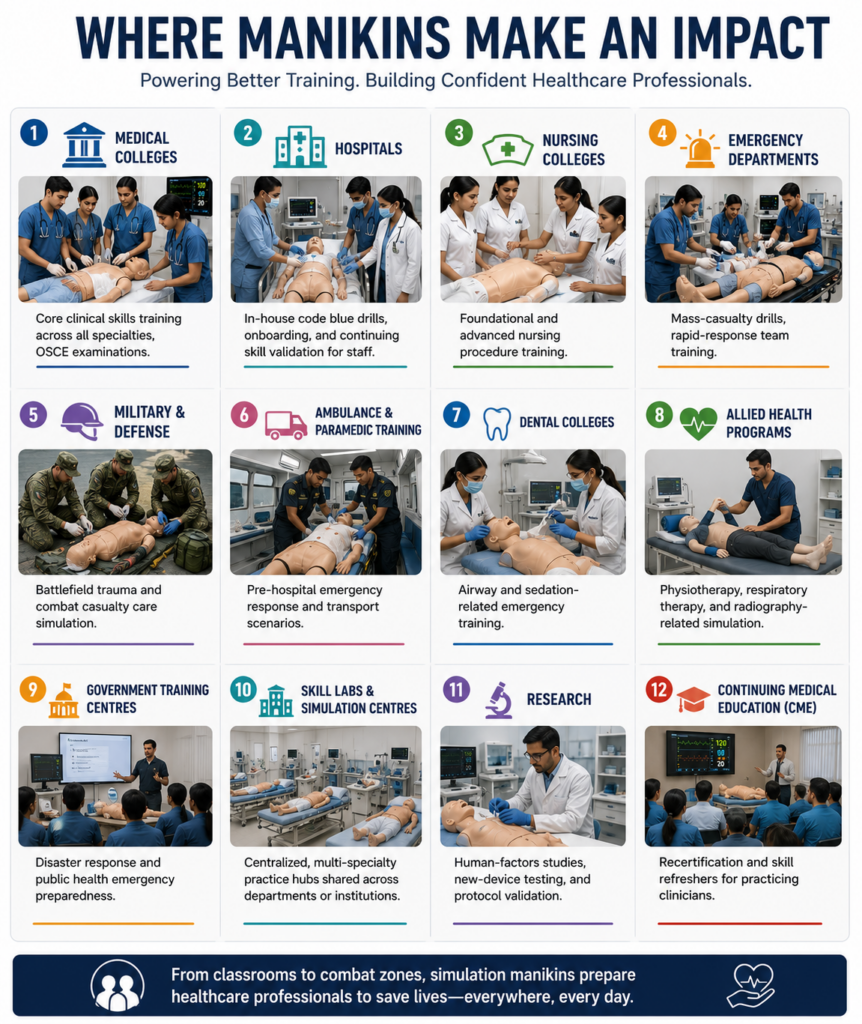
- Medical Colleges – Core clinical skills training across all specialties, OSCE examinations.
- Hospitals – In-house code blue drills, onboarding, and continuing skill validation for staff.
- Nursing Colleges – Foundational and advanced nursing procedure training.
- Emergency Departments – Mass-casualty drills, rapid-response team training.
- Military & Defense – Battlefield trauma and combat casualty care simulation.
- Ambulance & Paramedic Training – Pre-hospital emergency response and transport scenarios.
- Dental Colleges – Airway and sedation-related emergency training.
- Allied Health Programs – Physiotherapy, respiratory therapy, and radiography-related simulation.
- Government Training Centres – Disaster response and public health emergency preparedness.
- Skill Labs & Simulation Centres – Centralized, multi-specialty practice hubs shared across departments or institutions.
- Research – Human-factors studies, new-device testing, and protocol validation.
- Continuing Medical Education (CME) – Recertification and skill refreshers for practicing clinicians.
8. Benefits of Medical Simulation Manikins
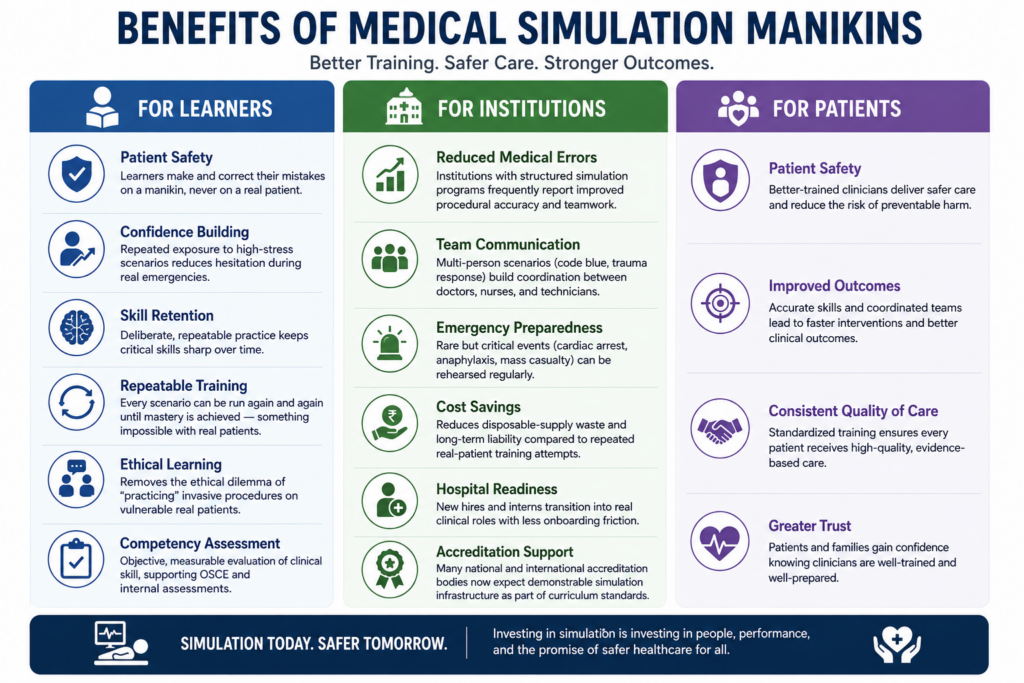
Patient Safety – Learners make and correct their mistakes on a manikin, never on a real patient.
Confidence Building – Repeated exposure to high-stress scenarios reduces hesitation during real emergencies.
Skill Retention – Deliberate, repeatable practice keeps critical skills sharp over time.
Reduced Medical Errors – Institutions with structured simulation programs frequently report improved procedural accuracy and teamwork.
Repeatable Training – Every scenario can be run again and again until mastery is achieved — something impossible with real patients.
Team Communication – Multi-person scenarios (code blue, trauma response) build coordination between doctors, nurses, and technicians.
Emergency Preparedness – Rare but critical events (cardiac arrest, anaphylaxis, mass casualty) can be rehearsed regularly.
Competency Assessment – Objective, measurable evaluation of clinical skill, supporting OSCE and internal assessments.
Ethical Learning – Removes the ethical dilemma of “practicing” invasive procedures on vulnerable real patients.
Cost Savings – Reduces disposable-supply waste and long-term liability compared to repeated real-patient training attempts.
Hospital Readiness – New hires and interns transition into real clinical roles with less onboarding friction.
Accreditation Support – Many national and international accreditation bodies now expect demonstrable simulation infrastructure as part of curriculum standards.
9. Features of Modern Simulation Manikins
Today’s high-fidelity manikins go far beyond a plastic body. Common features include:
- Wireless Operation – Tetherless control for realistic, mobile scenario delivery.
- Physiological Responses – Dynamic changes in vitals based on learner intervention.
- ECG Simulation – Multiple arrhythmia patterns for cardiac training.
- Heart & Lung Sounds – Auscultation-accurate audio for diagnostic practice.
- Palpable, Programmable Pulse – Adjustable strength and location.
- Drug Recognition – Sensors that detect simulated medication administration and trigger appropriate physiological response.
- Instructor Software – Tablet or PC-based control panels for real-time scenario management.
- Scenario Programming – Pre-built and customizable clinical scenario libraries.
- AI Integration – Adaptive scenarios that respond intelligently to learner decisions.
- Cloud-Based Learning – Remote scenario delivery, shared scenario libraries, and multi-site standardization.
- Performance Analytics – Automated scoring, compression depth tracking, and time-to-intervention data for debriefing.
- Wireless Operation – Tetherless control for realistic, mobile scenario delivery.
10. Buying Guide: How to Choose the Right Simulation Manikin
Selecting a manikin is a long-term investment decision, not just a procurement task. Institutions should evaluate:
- Budget – Total cost of ownership, not just sticker price — include software, accessories, and servicing.
- Training Goals – Basic skills vs. advanced critical care vs. specialty-specific training.
- Number of Students – Batch size determines whether one high-fidelity unit or several mid-fidelity units makes more sense.
- Course Type – MBBS, BSc Nursing, GNM, paramedical, or hospital in-service training each demand different fidelity levels.
- Maintenance Requirements – Complexity of servicing and availability of local support.
- Warranty Terms – Coverage duration and what is/isn’t included.
- After-Sales Service – Response time, spare parts availability, and technician access.
- Software Capabilities – Ease of use, scenario library depth, and update frequency.
- Upgrade Path – Whether the manikin can be upgraded as curriculum needs grow.
- Accessories – Availability of consumables, replacement skins, and add-on modules.
- Support & Training – Vendor-provided faculty training on how to use the equipment effectively.
- Scalability – Ability to expand the lab with compatible units over time.
11. Common Buying Mistakes Institutions Make
- Buying based on price alone, ignoring total lifecycle cost.
- Choosing high-fidelity units without faculty trained to use them.
- Underestimating annual maintenance and consumable costs.
- Not verifying local service and spare-parts availability.
- Purchasing without a clear curriculum mapping to scenarios.
- Ignoring software licensing renewal costs.
- Overlooking warranty exclusions until after a breakdown.
- Buying one high-end unit instead of several mid-fidelity units for larger batches.
- Not budgeting for staff training on equipment use.
- Failing to plan for storage and transport of delicate components.
- Neglecting to check upgrade compatibility for future software.
- Not asking for a live demonstration before purchase.
- Ignoring vendor track record and after-sales reputation.
- Overlooking calibration requirements for physiological accuracy.
- Purchasing without involving end-users (faculty, skill lab coordinators) in the decision.
11. Common Buying Mistakes Institutions Make
Proper maintenance protects both the manikin’s lifespan and the accuracy of training outcomes.
Daily
- Visual inspection for visible wear or leaks
- Battery charge check
- Basic function test before each session
Weekly
- Skin and joint cleaning
- Airway and lung pathway inspection
- Software/firmware status check
Monthly
- Full functional diagnostic run
- Sensor calibration check
- Consumable stock review (skins, veins, connectors)
Annually
- Professional servicing and deep calibration
- Software major-version updates
- Full physical inspection by a certified technician
Additional Best Practices
- Storage – Keep manikins in a climate-controlled environment, away from direct sunlight.
- Cleaning – Use manufacturer-approved solutions only; avoid alcohol-based cleaners on synthetic skin.
- Battery Care – Avoid full discharge cycles; store at partial charge during long non-use periods.
- Calibration – Regular calibration ensures vitals and physiological responses remain clinically accurate.
- Software Updates – Keep instructor software current for security and new scenario access.
- Annual Maintenance Contracts (AMC) – A structured AMC significantly reduces downtime and unplanned repair costs.
13. Future Trends in Medical Simulation (2026 and Beyond)
- Artificial Intelligence – Adaptive scenario engines that respond to learner decisions in real time, personalizing difficulty and feedback.
- Virtual Reality (VR) – Immersive scenario environments that extend manikin-based practice into fully simulated clinical settings.
- Mixed Reality (MR) – Overlaying digital physiological data directly onto physical manikins for richer visual feedback.
- Digital Twins – Virtual replicas of manikins or even patients, enabling scenario testing before physical simulation.
- Remote & Hybrid Simulation – Instructors running scenarios for geographically distributed learners via cloud platforms.
- Cloud-Based Analytics – Centralized performance tracking across multiple campuses or training centres.
- Learning Analytics – Data-driven identification of skill gaps at individual and cohort levels.
- Robotics – More lifelike movement and responsiveness in next-generation manikins.
- Wearable Sensors – Tracking learner physical technique (hand pressure, positioning) with greater precision.
- Personalized Learning Pathways – Curriculum that adapts to each learner’s demonstrated competency rather than a fixed schedule.
14. Why Institutions Are Investing in Simulation Labs
The return on investment in a simulation lab is not usually seen in one thing. It is seen in many areas. For example there are mistakes made by medical staff. The lab gets better accreditation students learn more and the lab is a great place for new students and teachers to work.
Institutions that start using simulation labs usually see some good things happen. These things include:
- Better results on exams and licensing tests
- They are better prepared for accreditation checks because regulatory bodies now expect to see simulation labs
- Students and teachers are happier with the quality of the training they get
- They do not need to use patients as much to teach basic skills
- The lab is something that can be used for years not just once
For people in charge of schools and hospitals and for the people who buy equipment a simulation lab is not just something that costs money. It is something that will be useful for a long time. The more it is used the more valuable it becomes.
14. Why Institutions Are Investing in Simulation Labs
Medical simulation is not meant to replace doctors or nurses or paramedics. It is meant to help them get ready. It gives every person who is learning the chance to make mistakes without hurting anyone to learn fast and to be ready for their real emergency. They can practice on a manikin, which’s a fake person and it does not put any real patient in danger.
The intern we talked about at the start of this guide did not become confident because she was born brave. Medical simulation helped her to become confident because she practiced a lot. The good thing about simulation is that it does not make people perfect but it makes them ready. Medical simulation helps people be ready. That is what saves lives when it is really important.
16. KEY TAKEAWAYS SUMMARY
- Medical simulation manikins let learners practice real clinical skills without risk to real patients.
- Fidelity levels (low, medium, high) should match training goals, batch size, and budget — not just the biggest budget available.
- Simulation-Based Medical Education (SBME) works through a briefing–simulation–debriefing–reflection cycle, with debriefing being the most critical step.
- Specialty-specific manikins (pediatric, neonatal, obstetric, trauma, ALS, etc.) allow institutions to build targeted, curriculum-aligned skill labs.
- Total cost of ownership — including maintenance, software, and consumables — matters more than upfront price.
- Regular maintenance and AMC coverage directly protect training quality and equipment lifespan.
- AI, VR, and cloud-based analytics are actively reshaping what simulation labs will look like beyond 2026.
- A well-planned simulation lab is a long-term institutional investment, not a one-time equipment purchase.
17. FREQUENTLY ASKED QUESTIONS (25 FAQs)
- What is a medical simulation manikin used for?
It is used to train healthcare learners in clinical procedures — from CPR to advanced trauma management — in a realistic, risk-free environment. - What is the difference between a manikin and a mannequin?
A “manikin” (medical spelling) refers to a functional training model with anatomical and physiological features, while a “mannequin” typically refers to a display or non-functional model. - What is the difference between low-fidelity and high-fidelity manikins?
Low-fidelity manikins offer basic anatomical practice with minimal or no electronic response, while high-fidelity manikins simulate dynamic physiology, vitals, and clinical scenarios in real time. - Do nursing colleges need high-fidelity manikins?
Not always. Many nursing programs use a mix of low, medium, and high-fidelity manikins depending on the skill level being taught, from basic procedures to advanced critical care scenarios. - How much does a medical simulation manikin cost?
Costs vary widely based on fidelity level, specialty, and features — from budget-friendly basic trainers to significant investments for advanced AI-enabled, wireless high-fidelity systems. A consultation can help match options to your budget. - What is Simulation-Based Medical Education (SBME)?
SBME is a teaching approach that uses simulated clinical environments — manikins, task trainers, or standardized patients — combined with structured debriefing to build competency. - Are simulation manikins recognized by accreditation bodies?
Simulation infrastructure is increasingly expected as part of curriculum and accreditation standards for medical and nursing programs, though specific requirements vary by regulatory body and institution type. - How often should a simulation manikin be serviced?
Most manikins need daily basic checks, monthly diagnostic reviews, and a comprehensive annual professional service, ideally under an Annual Maintenance Contract (AMC). - Can one manikin be used across multiple courses?
Many manikins are modular and support multiple training scenarios, though highly specialized manikins (e.g., neonatal or obstetric) are best used specifically for their intended specialty. - What is a hybrid simulation?
Hybrid simulation combines a physical manikin or task trainer with a live standardized patient (actor), allowing learners to practice both technical procedures and communication skills together. - What is AI-enabled simulation?
It refers to manikins or simulation systems integrated with AI-driven scenario engines that adapt in real time to learner decisions, offering a more dynamic and personalized training experience. - How long does a simulation manikin last?
With proper maintenance, most manikins have a productive lifespan of several years, though this depends on usage intensity, care, and component quality. - What is included in an Annual Maintenance Contract (AMC)?
AMCs typically cover scheduled servicing, calibration, priority repair support, and sometimes software updates — reducing unplanned downtime. - What is the ideal manikin for CPR training?
Dedicated CPR manikins with compression depth, rate, and recoil feedback sensors are ideal, as they provide objective performance data aligned with BLS/ACLS standards. - Can simulation manikins help reduce medical errors?
Structured simulation training is widely associated with improved procedural accuracy, better team communication, and increased clinician confidence, all of which contribute to error reduction. - What is debriefing in simulation training, and why does it matter?
Debriefing is the guided discussion after a simulation scenario where learners reflect on their performance. It is often considered the most valuable part of the learning cycle. - Do simulation manikins require special software?
High and medium-fidelity manikins typically require instructor software to program scenarios, monitor performance, and control physiological responses. - What is the difference between a task trainer and a full-body manikin?
A task trainer focuses on a specific skill (e.g., an IV arm or airway head), while a full-body manikin allows for whole-scenario management including multiple simultaneous interventions. - Are simulation manikins used in hospitals, not just colleges?
Yes. Hospitals use manikins for staff onboarding, code blue drills, and ongoing skill validation for existing clinical teams. - What is a digital twin in medical simulation?
A digital twin is a virtual replica of a manikin or patient model used to test or preview scenarios digitally before physical simulation. - Can simulation labs be set up on a limited budget?
Yes. Institutions can start with low and mid-fidelity manikins and scale up to high-fidelity systems as budget and curriculum needs grow. - What accessories are commonly needed with simulation manikins?
Common accessories include replacement skins, simulated blood, IV arms, airway heads, batteries, and scenario software licenses. - How is manikin-based training assessed?
Assessment often uses standardized checklists, instructor observation, and increasingly, built-in performance analytics from the manikin’s software. - What is the role of simulation in continuing medical education (CME)?
Simulation allows practicing clinicians to refresh critical skills, stay current with new protocols, and maintain certification competencies throughout their careers. - How do I choose the right simulation manikin vendor?
Look for a vendor with strong after-sales service, local spare-parts availability, faculty training support, and a track record with institutions similar to yours.